
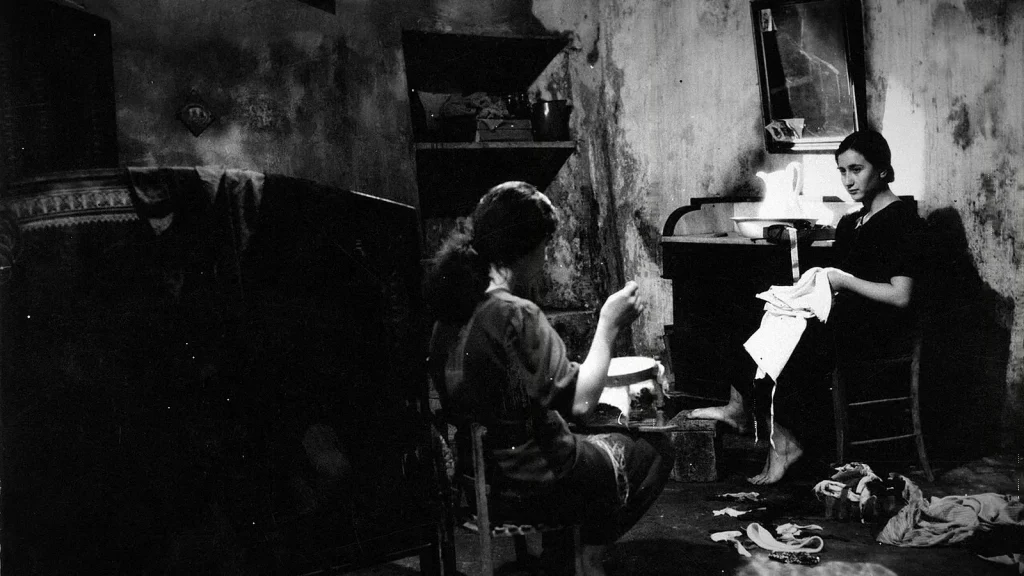
In Hezar Dastan, Ali Hatami builds a story that looks simple on the surface: political intrigue and assassinations in old Tehran—a lavish epic of modern Iranian history.
Hatami built a city that existed only in memory. That sentence may be the best way into a film we have been discussing for years.
On a second viewing, details surface that escaped us the first time: an object in the background, a pause, a repetition. The film is a house we enter through a different door each time.
Its relationship to its time is remarkable. Without sloganeering, it portrays a society where private relationships and larger structures are intertwined. Politics here happens in kitchens and corridors.
What sets the film apart from its contemporaries is its trust in time. Shots are allowed to breathe, and the viewer is given room to live inside the story rather than chase it. The slowness is not hesitation; it is confidence.